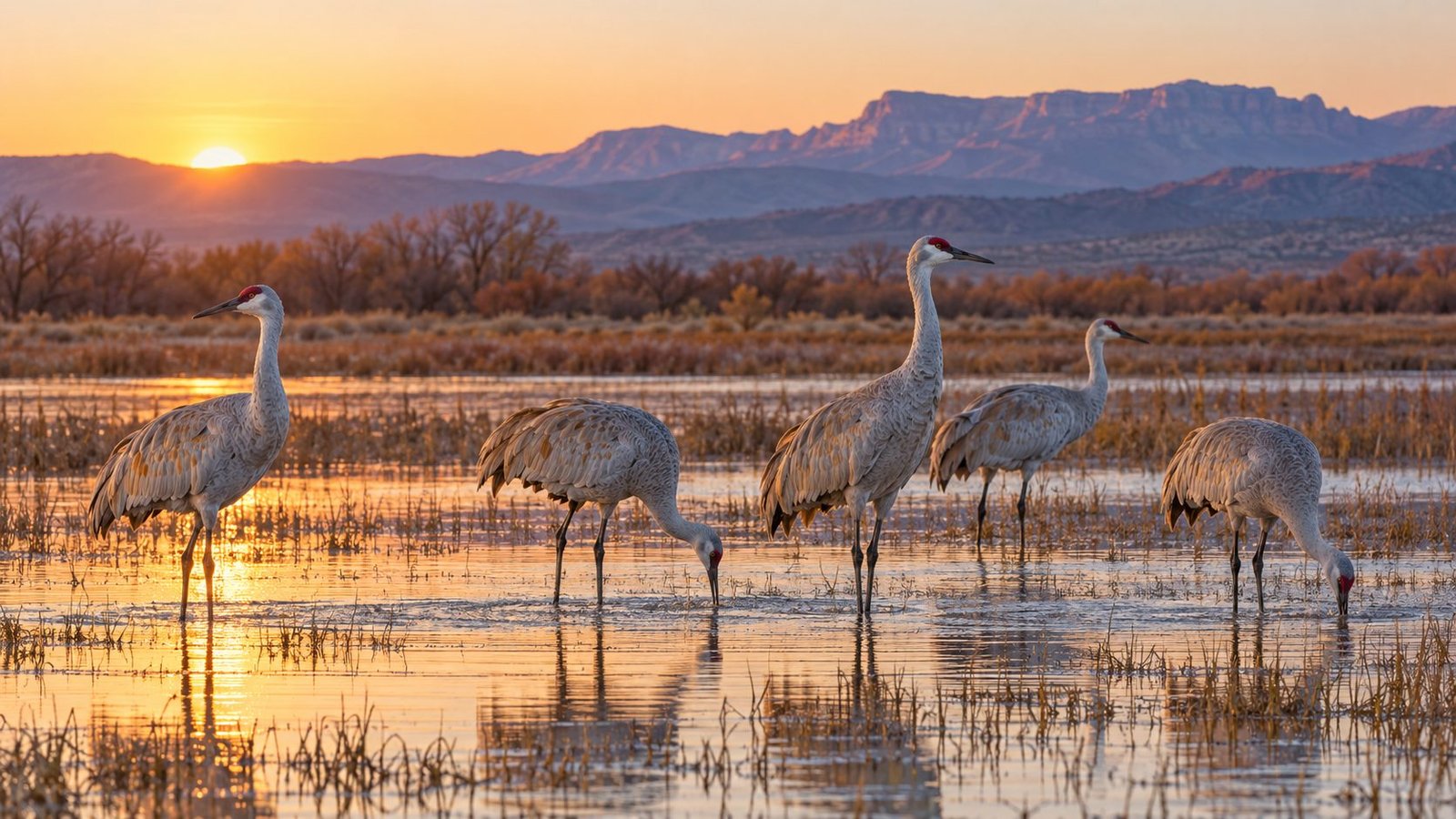
November is a useful month to plan a birdwatching visit to Bosque del Apache National Wildlife Refuge in New Mexico. Sandhill cranes typically arrive from late October, while the refuge identifies early November through late January as a period with its greatest bird numbers. Sightings and flock sizes remain variable. U.S. Fish & Wildlife Service
Choose a wildlife outing, not a guaranteed spectacle
Bosque del Apache provides habitat for wintering cranes, ducks, and geese. The experience changes with water management, migration, weather, and where birds choose to feed or rest.
Avoid treating an impressive online photograph as a promise. You may see a large gathering, scattered birds, or quiet water while activity takes place elsewhere.
Start with a simple objective: identify three species, watch one flock for several minutes, or learn to recognize a crane’s call. That makes the day worthwhile without requiring a dramatic mass takeoff.
Bring binoculars if available. A camera with a long lens is optional, not a condition of participation.
Check the route before leaving Socorro
The refuge announced water-control infrastructure construction around the Tour Loop beginning around September 29, 2026. Check the official refuge page for access changes before planning a precise driving circuit. U.S. Fish & Wildlife Service
Download maps and identify permitted stopping areas. Build extra time into the day so a detour does not force you to hurry between viewpoints.
If visiting for a workshop or organized event, confirm registration separately. The Festival of the Cranes has its own schedule and arrangements; ordinary refuge access should not be confused with admission to a specific program.
Keep fuel, drinking water, food, and a warm layer in the vehicle. A comfortable setup makes patient observation easier.
Watch without moving the birds
Use designated observation areas and remain behind barriers. If birds change their behavior because of your approach, increase the distance.
Avoid approaching a flock to trigger flight for a photograph. Do not play recorded calls or offer food. A quiet vehicle or stationary viewing position often produces a better experience than repeatedly moving closer.
When stopping along an authorized route, leave space for other visitors and do not block traffic. Keep voices low and share viewing opportunities.
Beginners should alternate between binoculars and unaided viewing. Looking at the wider landscape helps you notice incoming birds and understand how they use the wetland.
Prepare for a cold, patient morning
A dawn visit requires more preparation than an afternoon roadside stop. Check the forecast, wear layers, and pack gloves that allow you to operate binoculars.
Set up equipment before reaching a crowded viewpoint. Keep bags compact and avoid extending tripod legs into a walking route.
If traveling with children, bring a notebook and let them sketch shapes or record calls. Short observation periods with breaks may work better than expecting an hour of silence.
Before leaving, write down what you actually observed. Accurate notes are more useful than attaching a species name to an uncertain photograph.
Takeaway: Check access, bring patience, and let the birds determine the pace.
FAQs
Are sandhill cranes guaranteed in November?
No. November falls within their typical winter-visiting period, but wildlife locations and numbers vary.
Should visitors check the Tour Loop before traveling?
Yes. Infrastructure work announced for fall 2026 makes current access information particularly important.
Related guides: Thanksgiving Road Trip Planning Checklist · Daylight Saving Time Travel Checklist
Sources: Refuge updates · Seasonal species information · FWS seasonal birdwatching feature