Power banks belong in carry-on baggage, not checked luggage. If an airline checks your cabin bag at the gate, remove the power bank and keep it with you in the aircraft cabin. Check your airline’s current capacity, quantity, storage, and onboard-use rules before traveling. Federal Aviation Administration
Check the label before packing
Find the watt-hour rating printed on the power bank. The FAA’s general limit for rechargeable lithium-ion batteries is 100 watt-hours per battery; certain larger spare batteries up to 160 watt-hours require airline approval and have additional limits.
Airlines may impose stricter conditions, including limits on the number of power banks. A product advertised as “travel friendly” is not proof that every carrier accepts it. Federal Aviation Administration
Photograph the label so it is easy to reference, but keep the original marking readable. If the device is damaged, swollen, recalled, or behaving abnormally, do not pack it.
For connecting journeys, check every operating airline—not only the company that sold the ticket.
Create a gate-check routine
The most easily missed step occurs when a carry-on suddenly becomes checked baggage.
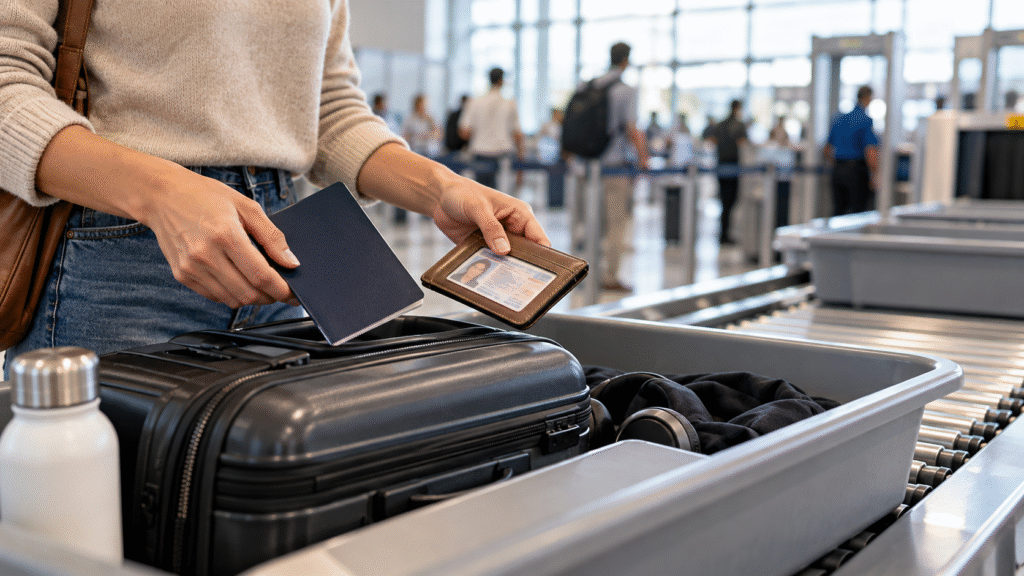
Place your power bank, spare batteries, medication, identification, and essential valuables in a small removable pouch. Before handing over the suitcase, transfer that pouch to your personal item.
Do the same check for every traveler in the group. Children may have chargers tucked inside gaming cases or backpacks, while camera users may carry spare batteries in separate compartments.
Keep the pouch somewhere you can reach without emptying the entire bag. A rehearsed routine is particularly useful during busy holiday boarding.
Protect the device during the journey
Pack spare batteries so their terminals cannot contact metal objects. Avoid leaving a power bank loose with keys or coins, and protect it from crushing or other damage.
If a battery or device becomes unusually hot, expands, smokes, or burns onboard, notify the cabin crew immediately. Federal Aviation Administration
Follow the crew’s instructions rather than trying to hide or troubleshoot the problem yourself.
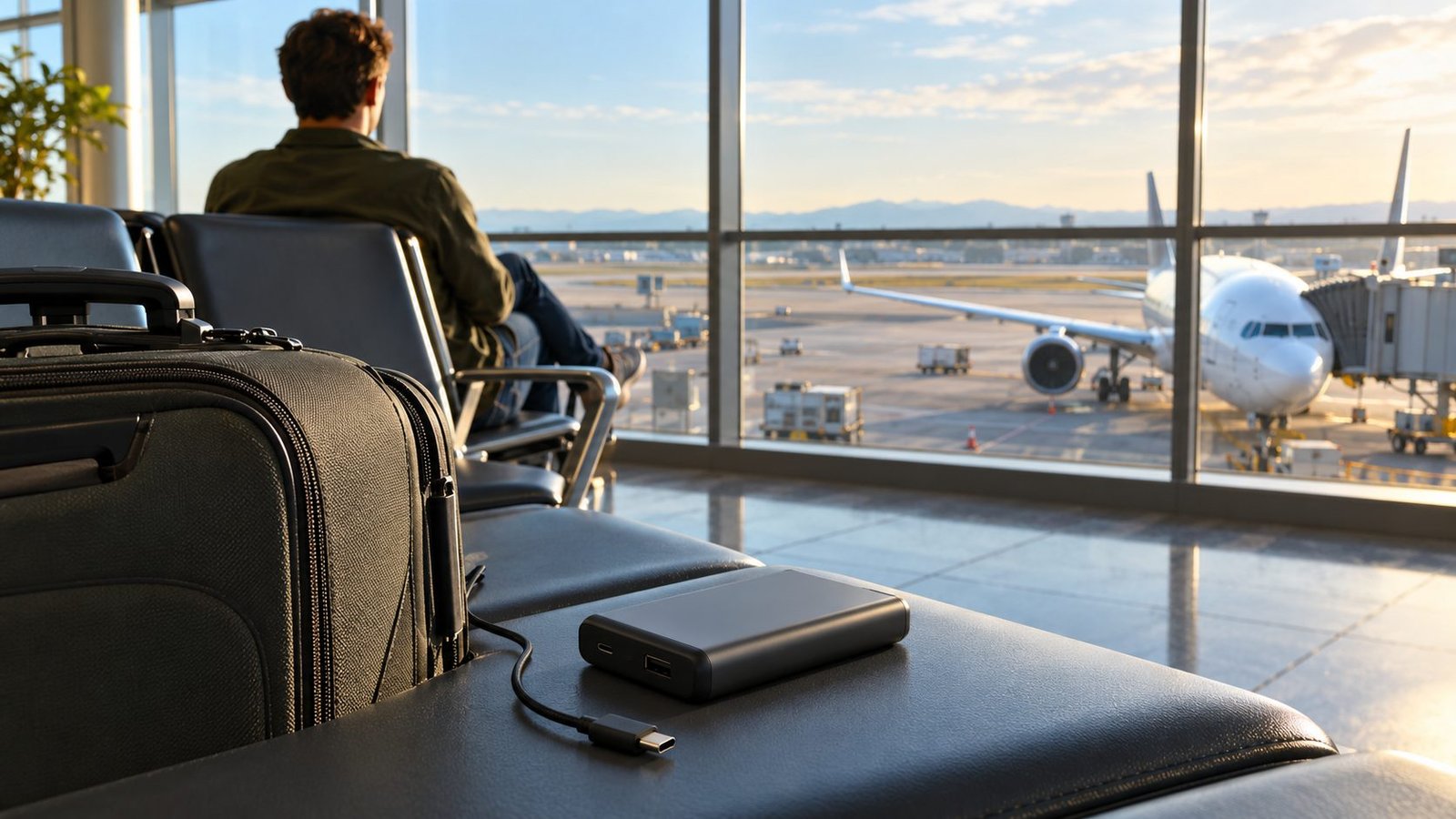
Keep charging cables organized and avoid stretching them across aisles or shared seating. Before leaving an airport bench, check for the power bank, cable, phone, and wall adapter separately.
Reduce your dependence on emergency charging
Charge devices before leaving home and download boarding information, maps, and accommodation details in advance. Carry a compatible wall charger as well as the portable battery.
Use low-power mode when appropriate and close unnecessary apps. A fully charged phone provides more flexibility if a connection changes or airport charging outlets are occupied.
There is no need to buy a new device solely for one holiday trip if your existing, compliant power bank meets your needs. If replacing it, prioritize a clearly marked rating, reliable manufacturer information, and the rules of the airline you actually use.
Takeaway: Read the rating, check the carrier, and remove the power bank before any gate check.
FAQs
Can a power bank go in checked luggage?
No. Spare lithium batteries, including power banks, must remain in carry-on baggage.
Does meeting the FAA’s general limit guarantee airline acceptance?
No. Airlines can impose stricter quantity, capacity, and operating restrictions.
Related guides: Daylight Saving Time Travel Checklist · Thanksgiving Road Trip Planning Checklist
Sources: FAA PackSafe lithium-battery guidance · TSA permitted-items directory