Congaree National Park makes a rewarding fall outing when you plan around water levels rather than a fixed trail itinerary. Start with the official conditions page, choose a confirmed-open route, and keep an alternative ready. Flooding can affect trails even when rain is not falling locally. nps.gov
Check conditions before choosing a trail
Congaree protects a floodplain forest near Hopkins, South Carolina. Water is part of the landscape’s natural rhythm, not simply an inconvenience that appears after a storm.
The National Park Service reports periodic flooding that can make backcountry trails and portions of the boardwalk inaccessible. Conditions upstream matter, so a sunny forecast for your visit does not guarantee dry trails. nps.gov
Check alerts the evening before traveling and again before leaving your accommodation. Save the park map offline, then identify where you will start, where you will turn around, and what you will do if that route is closed.
For a longer drive, consider calling the park when the online information leaves an important question unanswered.
Use the boardwalk as an introduction
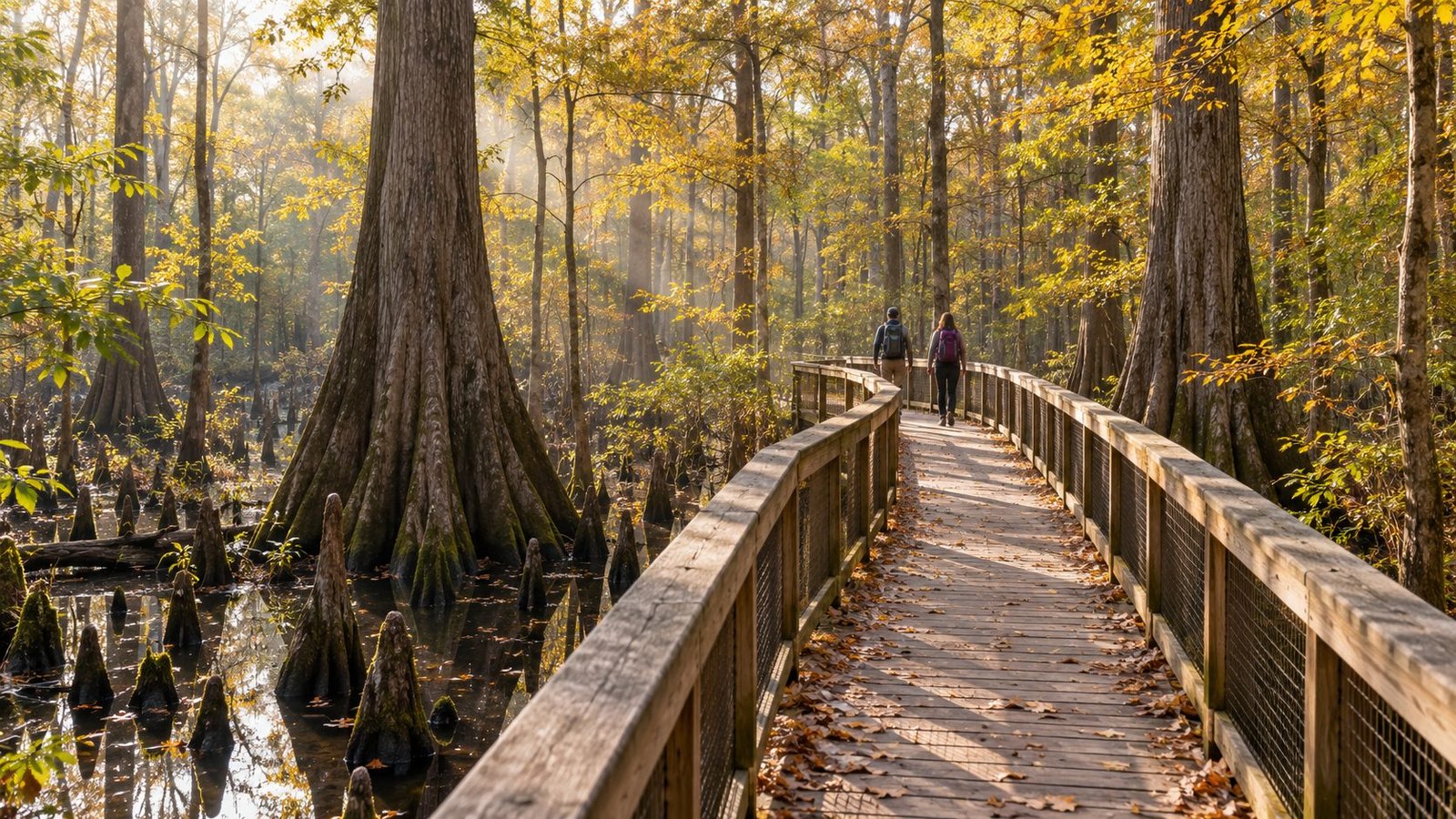
The approximately 2.6-mile Boardwalk Loop offers an introduction to the forest without requiring a long backcountry hike. Its relatively flat route lets visitors focus on tree trunks, cypress knees, water reflections, and the sounds of the canopy. home.nps.gov
However, “boardwalk” does not mean every section is always available. The park’s construction page records a May 23, 2026 update saying the boardwalk was open, while directing visitors to current alerts for newer closures. Treat that dated update as background—not a guarantee for your travel day. nps.gov
Choose a shorter out-and-back walk if your group needs flexibility. You do not need to finish a complete loop to enjoy the park.
Pack for a damp, changeable environment
Bring water, snacks, rain protection, and shoes with dependable traction. Fallen leaves and moisture deserve attention, particularly when stepping onto wooden surfaces.
Mosquitoes can remain present into mid-fall, according to the park’s conditions guidance. Pack repellent rather than assuming cooler weather has eliminated them. nps.gov
Keep your phone accessible, but avoid spending the entire walk looking through a camera. Stop occasionally and listen. A quiet pause can reveal birds and movement that hurried visitors miss.
Families can make the outing more engaging by looking for different bark textures, reflections, and leaf shapes without collecting natural objects.
Keep the afternoon flexible
Plan one main walk and one optional activity. If water blocks your preferred route, follow ranger guidance instead of searching for an unofficial way around a closure.
Never enter floodwater to complete a loop. Avoid stepping off established routes for a better photograph, especially where the ground is obscured.
For a weekend visit, pair the park with time in nearby Columbia rather than relying on two full days of hiking. That leaves room for changing weather and makes the trip less dependent on one trail.
Takeaway: At Congaree, a flexible route and a fresh conditions check matter more than completing a predetermined distance.
FAQs
Can Congaree flood when the local weather is dry?
Yes. Upstream rainfall can affect river levels, so check park conditions as well as the local forecast.
Must visitors complete the entire Boardwalk Loop?
No. A shorter walk can suit your group, provided you remain on officially open routes.
Related guides: Great Smoky Mountains in Fall: How to Avoid the Busiest Crowds · Daylight Saving Time Travel Checklist
Sources: Current conditions · Boardwalk information · Construction updates