Direct answer: Eastern North Pacific gray whales migrate south along North America’s coast during fall and winter, traveling toward breeding and calving areas off Baja California. California visitors can look for them from shore or join a responsible boat tour, but sightings are never guaranteed. NOAA Fisheries
Understand the migration
NOAA monitors the southbound migration primarily from December through February. Timing varies from year to year and individual whales do not move as a single group. NOAA Fisheries
Avoid treating “whale season” like a scheduled performance. Weather, visibility, ocean conditions, food availability, and the animals’ movement all influence a trip.
Winter and spring are useful periods for observing gray whales along parts of California’s coast, but a responsible operator should never promise a close encounter.
Try watching from shore first
Shore-based viewing avoids seasickness, requires no boat ticket, and reduces disturbance to wildlife.
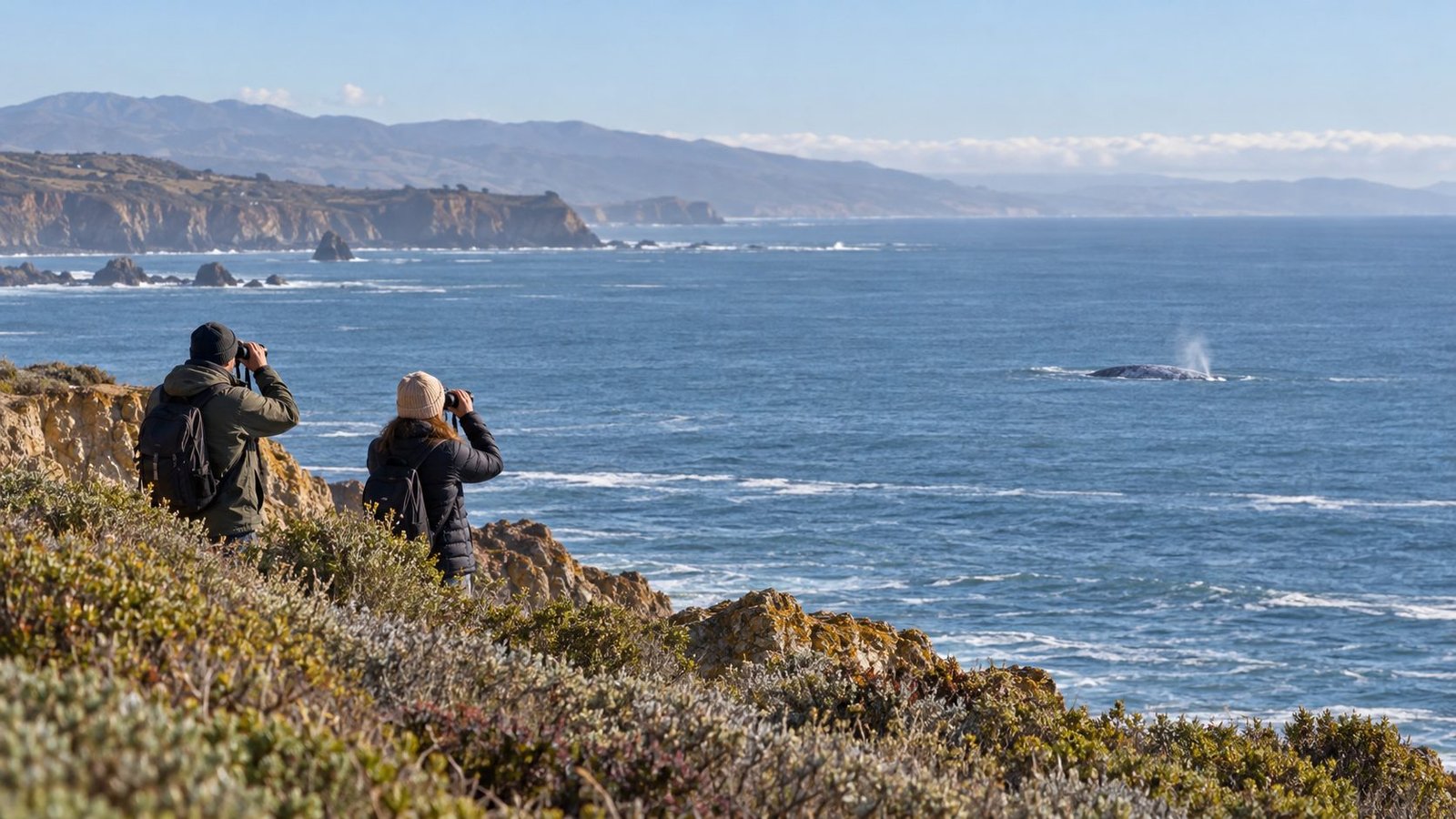
Choose a designated public coastal viewpoint with a broad ocean view. Bring binoculars and scan slowly rather than staring at one spot. A gray whale’s exhalation may appear as a brief misty blow above the water.
Look for repeated signs:
- A blow followed by a dark back
- Several surfaces along a consistent route
- A tail fluke before a deeper dive
- Seabirds or boats observing something offshore
Stay behind railings and away from unstable cliff edges. Winter surf can be hazardous even on a clear day.
Choose a responsible tour operator
Ask prospective operators whether they follow federal law and NOAA viewing guidance. Monterey Bay National Marine Sanctuary advises travelers to choose companies that avoid disturbing whales or causing them to change their natural behavior. Monterey Bay National Marine Sanctuary
A responsible trip prioritizes safe observation over getting closest. NOAA advises keeping at least 100 yards from large whales when observing by sea or land. NOAA Fisheries
Never ask a captain to chase, encircle, or intercept an animal. Do not use food, sound, light, or a drone to attract wildlife.
Prepare for a winter boat trip
Check the marine forecast and cancellation policy. Wear warm, wind-resistant layers even if the land temperature seems mild.
Bring sun protection, water, binoculars with a neck strap, and seasickness medication if appropriate for you. Secure phones and cameras rather than leaning over a railing.
Takeaway: Watch patiently, accept distance, and judge a tour by how well it protects wildlife rather than how closely it approaches.
FAQs
When do gray whales migrate past California?
Southbound migration occurs during fall and winter, with NOAA monitoring commonly focused on December through February.
How close can a whale-watching boat approach?
NOAA promotes viewing large whales from at least 100 yards away, while operators must also follow applicable federal and regional rules.
Related guides: Nature Destinations in the USA Without Extreme Hiking · USA Travel for Introverts
Sources: NOAA gray-whale profile · NOAA responsible wildlife viewing · Monterey Bay whale-watching guidelines