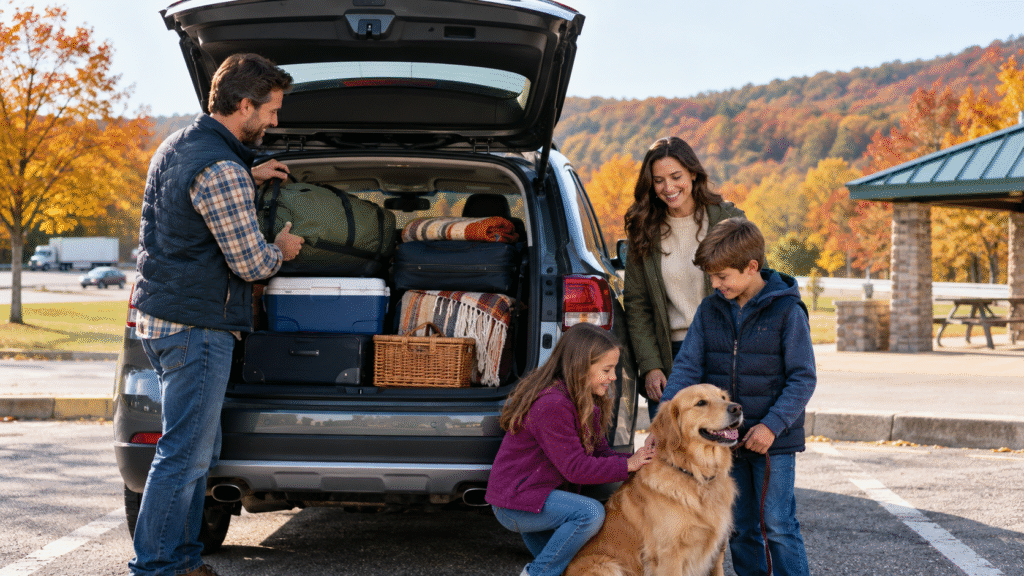
For a first fall camping trip, choose an established campground, confirm its seasonal services, and keep the stay short. A nearby one- or two-night trip gives you time outdoors without making complicated logistics part of the adventure. Begin with the campground’s actual facilities and forecast—not just an attractive photograph.
Choose a campground that matches your needs
Frontcountry camping generally means driving to an established campground with designated sites. Facilities vary: showers, drinking water, electricity, and food-storage arrangements should be checked individually. NPS advises reviewing the park’s specific camping information rather than assuming every campground provides the same amenities. Camping (U.S. National Park Service)
Write down your essentials before searching. You may want a restroom nearby, a suitable tent pad, a manageable drive, or a clearly described accessible site. These practical details can matter more than a scenic view.
Check whether services remain available on your dates. A campground’s general description may not tell you whether seasonal facilities are operating during an October weekend.
Book the site, not just the campground
Read the individual site description. Confirm vehicle limits, tent-space details, arrival instructions, and any restrictions relevant to your equipment.
Keep your confirmation available offline and know what to do if you arrive after the staffed check-in period. Download a campground map so finding your site does not depend on a mobile signal.
Review cancellation terms before paying. Recreation.gov notes that location-specific policies can supersede its standard rules. Use the terms attached to your reservation rather than an assumed universal refund policy. Recreation.gov
If your preferred site is unavailable, compare another campground or another weekend. Avoid booking something unsuitable simply because it is the only remaining option.
Test your setup before leaving
Pitch your tent at home and check that its poles, stakes, and rain protection are complete. Practice arranging bedding and packing it away.
Choose a sleeping system suited to the expected overnight conditions, and understand what its ratings mean. If the forecast exceeds your equipment or experience, change the trip rather than relying on extra improvisation after dark.
Pack a headlamp where you can reach it immediately. Arriving with enough daylight to find the site and set up calmly can make the first evening much easier.
Keep meals and activities simple
Plan meals with few preparation steps and little cleanup. Bring the water you need unless you have confirmed an appropriate supply.
Follow the campground’s food-storage requirements. Wildlife should never be fed, and unattended food or coolers can attract animals. NPS also reminds campers that connectivity may be limited, so download useful information before arrival. Camping (U.S. National Park Service)
Choose one manageable daytime activity and leave time to enjoy the campsite. Do not make a campfire essential to cooking or warmth; check local fire rules and prepare a suitable alternative.
Make departure easy
Allow time to dry or carefully pack wet equipment, collect small scraps, and check the site. Follow posted checkout rules and leave shared facilities tidy.
Back home, note what you used and what you missed. Borrowing equipment for the first trip can help you make better purchases later.
Takeaway: A successful first weekend is comfortable enough that you want to go again—not complicated enough to prove anything.
FAQs
- Do established campgrounds always have showers? No. Check the specific campground.
- Are Recreation.gov cancellation rules identical everywhere? No. Facility-specific terms may take precedence.
Sources: NPS: frontcountry camping · Recreation.gov reservation policies